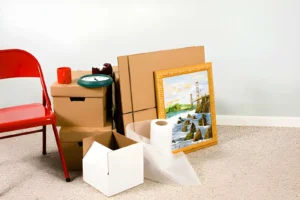
Most of the breakages on a Sydney move happen inside a box, not on the truck. A wine glass in one sheet of newspaper, a stack of plates laid flat, a mirror with nothing over the glass: each looks fine when the box is taped and arrives in pieces. After 25 years of unloading North Shore homes, Careful Movers has seen the same packing mistakes on almost every job.
This guide covers how to pack fragile items for moving so glassware, crockery, artwork and ornaments arrive in the state they left. The method is the same for a studio in Cammeray or a house in Wahroonga: small strong boxes, every piece wrapped on its own, every gap filled, every box labelled. Furniture is our job, wrapped in quilted blankets on the day as part of the hourly rate.
What You Need Before You Start Packing?
Buy more boxes than you think you need, and buy them small. A box of glassware that two people can lift is a box that gets dropped, so the right size for fragile items is the one a single mover can carry at chest height, roughly 30 to 40 litres. Double-walled boxes cost a dollar or two more than single-walled ones and are worth it for anything made of glass or ceramic, because the second wall is what stops a corner caving in when the box is stacked in the truck.
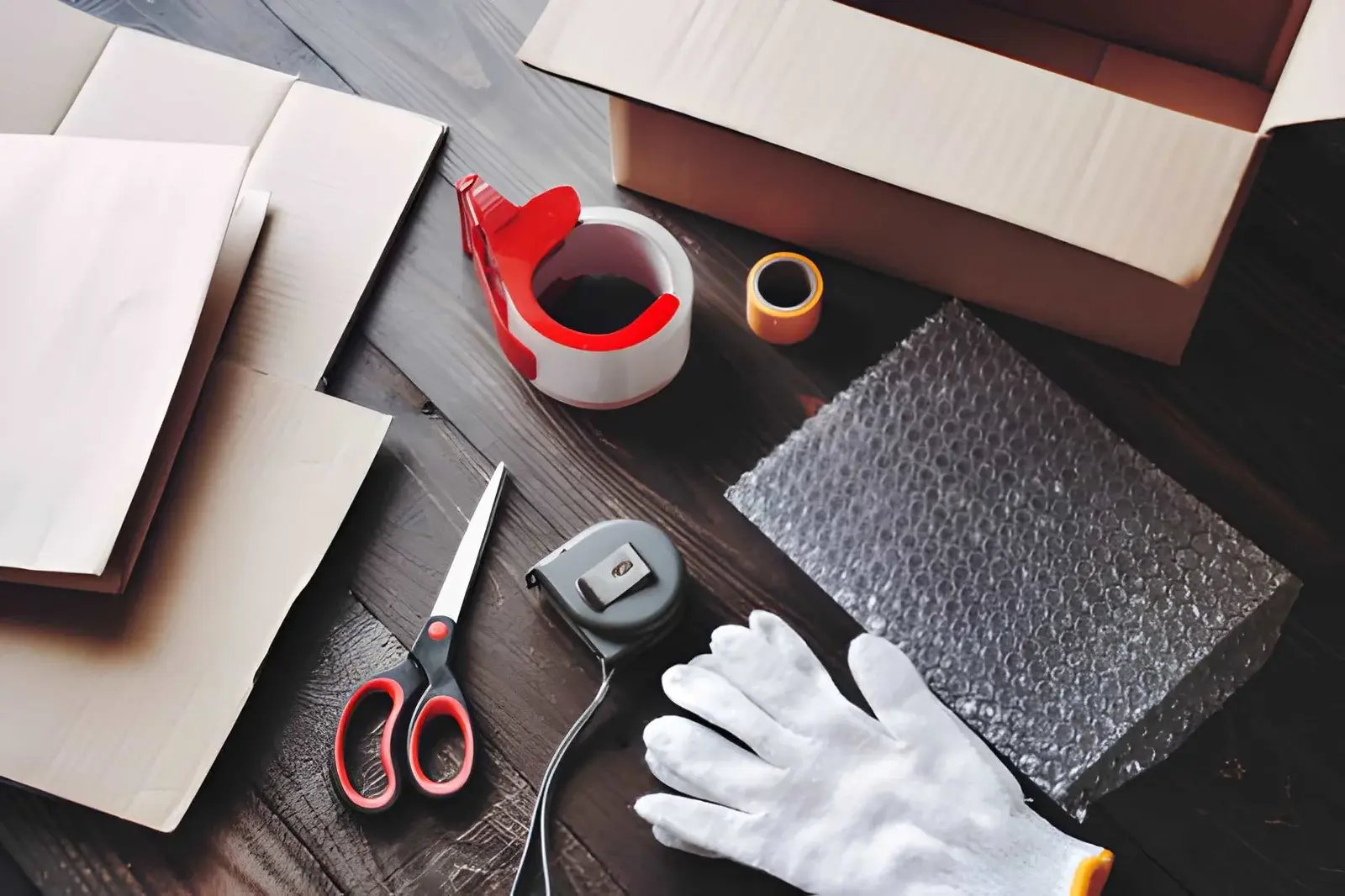
For wrapping, you need packing paper, bubble wrap, and a roll of good tape. Newspaper works for cushioning but leaves ink on white china, so use plain packing paper against anything that will be on the table. Bubble wrap goes on glass and anything with a thin edge. Add a marker, a tape gun if there are more than 20 boxes to pack, and a pile of old towels or tea towels, which are the best filler for the top of a box and cost nothing.
Budget around $150 to $250 for materials on a three-bedroom house, most of it boxes. Second-hand boxes from a bottle shop or a neighbour who has just moved are fine for books and linen, but fragile items need boxes that have not been softened by a previous trip. If you would rather not send 60 boxes to the recycling bin afterwards, eco-friendly removalists in Sydney covers reusable crates and where used cartons can go.
How to Pack Fragile Items Step by Step?
The steps below are in the order the box is packed. Every box of fragile items starts with a cushioned base, takes the heaviest pieces first, ends with soft filler, and is taped along every seam. What sits between the base and the filler depends on the item, and the sections that follow cover the five kinds of fragile item that break most often on a Sydney move.
1. Glasses and Stemware
Wrap each glass on its own. Lay a sheet of packing paper flat, put the glass on its side at one corner, tuck paper into the bowl, and roll the glass diagonally across the sheet, folding the ends in as you go. Wine glasses get a second sheet around the stem before the roll, because the stem is the part that snaps. Once wrapped, glasses stand upright in the box, rim down, in a single layer with paper between each one.
Never lay glasses flat or stack them. A box of standing glasses spreads the weight through the base of each one, which is the strongest point. A box of glasses on their sides puts the weight of everything above on the rims. Cell dividers, the cardboard grids sold for wine bottles, fit most tumblers and stemware and take the guesswork out of spacing.
2. Plates, Bowls and Crockery
Plates go in the box on their edge, not flat, like records in a crate. A stack of flat plates puts the full weight of the stack on the bottom one, and one pothole on the Pacific Highway is enough to crack it. Wrap each plate in a sheet of packing paper, place a sheet of bubble wrap between every two, and stand them on their edges along the length of the box with a thick layer of crumpled paper underneath.
Bowls nest inside each other with a sheet of paper between each one, then the nested stack is wrapped as a unit and placed on its edge the same way. Cups and mugs are wrapped individually, with the handle stuffed with paper first, and go in the gaps between the rows of plates. Keep the box under 15 kilograms. Crockery is dense, and a big box of plates is the one that goes through its own base.
3. Artwork, Mirrors and Picture Frames
Tape a large X across the face of a mirror or the glass on a frame with painter’s tape. It does not stop the glass breaking, but it holds the pieces together if it does, so a crack does not become a bag of shards. Wrap the whole piece in bubble wrap, then cut a sheet of cardboard to cover the front and back, and tape the cardboard on. Corner protectors from the hardware store add a layer where a frame takes its knocks.
Anything larger than a laptop travels upright, never flat, in a flat picture box or between two sheets of stiff cardboard. On the truck, our movers stand framed pieces between mattresses or against a padded wall, which is where the cardboard sleeve earns its keep. Oil paintings on canvas are the exception to the bubble wrap rule. Wrap them in clean packing paper or glassine first, because plastic against varnish can leave a mark.
4. Lamps, Electronics and Small Appliances
Take the lamp apart. The shade travels on its own, wrapped in paper inside a box big enough that it does not touch the sides. The base is wrapped in bubble wrap with the cord coiled and taped to it. Bulbs come out and go in with the glassware. A lamp packed assembled has three fragile parts working against each other for the whole trip.
Televisions and monitors travel upright in the box they came in if you still have it, or in a flat-screen box from the hardware store with foam corners. Wrap the screen in a clean blanket before it goes in, never in bubble wrap directly against the glass. Small appliances go in their own boxes with the cords taped down, and anything with a glass carafe or bowl has that part wrapped separately.
5. Ornaments, Vases and Small Antiques
Small ornaments are the pieces that get lost as much as broken. Wrap each one in paper, then in bubble wrap, and put a few together in a small box lined with towels, with the box marked for the room and the contents. A vase is packed like a glass, with paper inside the body and bubble wrap outside, standing upright in a box on its own with filler on every side.
Anything old, valuable or irreplaceable gets photographed before it is wrapped, so there is a record of the piece and its condition on the day of the move. That takes a minute per item and matters if a claim ever needs to be made. Antiques that are large, heavy, or made of marble, stone or glass should not go in a box at all, which brings us to the pieces you should not pack yourself.
What Not to Pack Yourself?
Some fragile items are too heavy, too awkward or too valuable to be wrapped in a box and carried like the rest. A piano, a marble table top, a stone garden statue, a pool table and most antique furniture are all fragile in the way that matters, and each one is moved as a specialty piece on its own board with its own straps. Piano removals in Sydney are quoted on the instrument and the access rather than by the hour, and marble and stone travel wrapped in two layers of quilted blanket, strapped upright to the truck wall.
The same applies to anything going a long way. A box packed for a move from Mosman to Lindfield is not packed for 900 kilometres of the Hume, and fragile furniture transport from Sydney to interstate covers how antiques and artwork are crated and braced for a Melbourne or Brisbane run. Tell the owner about these pieces on the quote call. They change the crew and the truck, and a $190 per hour local move with a marble top in it is quoted differently from one without.
Labelling and Loading Fragile Boxes
Write FRAGILE on two sides and the top of every box of breakables, with the room it is going to and a two-word summary of the contents, and add THIS WAY UP with an arrow on anything that has to stay upright. The movers read the sides of the box, not the top, once it is on a trolley, so the side labels are the ones that matter. A box marked KITCHEN GLASSES rides on top of the load and comes off the truck last.
On the day, stack the fragile boxes together near the front door so the crew can load them as a group. Careful Movers loads heavy and square first, then soft, then fragile boxes last on top where nothing sits on them. On a walk-up, fragile boxes come down the stairs by hand rather than on a stair trolley, and moving furniture upstairs and downstairs in Sydney covers how the rest of the load handles a stairwell in Neutral Bay or Crows Nest.
Frequently Asked Questions
Q. What is the best way to pack fragile items for moving?
Wrap each piece individually in packing paper, add bubble wrap to glass and thin edges, and pack them into small double-walled boxes with a cushioned base and filler in every gap so nothing moves. Glasses stand upright, plates stand on their edge, and framed pieces travel upright in cardboard sleeves.
Q. Should plates be packed flat or on their side?
On their side, like records in a crate. Flat stacking puts the weight of the whole stack on the bottom plate, and a single bump cracks it. Plates on their edge share the load along the strongest axis, with paper between each one and a thick cushion of crumpled paper underneath.
Q. How do I pack a mirror or framed picture for moving?
Tape an X across the glass with painter’s tape, wrap the whole piece in bubble wrap, then cover the front and back with cut cardboard and tape it on. Keep it upright at all times. Paintings on canvas get packing paper or glassine against the surface before any plastic, because bubble wrap can mark varnish.
Q. Do removalists pack fragile items for you?
Some Sydney removalists offer a packing service at an added rate. Careful Movers wraps and protects furniture on the day as part of the hourly rate, using quilted blankets and straps, and customers pack the boxed items themselves before the crew arrives. Pianos, marble, stone and antiques are the exception and are handled as specialty items by our movers.
Q. What fragile items should I not pack myself?
Pianos, marble and stone table tops, statues, pool tables, large mirrors and antique furniture. Each is heavy or awkward enough to need a skid board, straps and two or three movers, and each is quoted as a specialty item rather than packed in a box.