A painting is the one item where the damage does not show until later. A cracked plate is obvious on the day. A canvas that was leaned against a wall for the drive from Mosman to Lindfield shows a dent in the weave a week after it is hung, and a canvas wrapped in bubble wrap on a warm day shows the bubble pattern pressed into the varnish. Careful Movers has carried paintings out of North Shore homes for 25 years.
This guide covers how to pack paintings for moving so the canvas, the paint and the frame all arrive the way they left. It takes the painting type first, because a stretched canvas, a board and a framed piece under glass each need a different wrap, then covers the box, the truck and what changes on an interstate run.
Canvas, Board or Framed Glass: Why the Painting Type Changes the Wrap?
The wrap depends on what the painting is made of. A stretched canvas is fabric pulled over a timber frame, and the fabric is the weak point: press on the back and it dents, lean it against a corner and the corner prints through. A painting on board or panel is rigid and takes a knock better, but the edges chip. A framed piece under glass has three things to protect at once, and the glass is the one that turns a small bump into a shredded canvas.
The paint matters as much as the support. Oil paint stays slightly soft for years and marks where anything presses on it, so nothing plastic touches an oil painting directly. Acrylic is harder once dry but goes tacky in heat, and a Sydney garage in February is warm enough for bubble wrap to stick to it. Check the surface before you start. Flaking or lifting paint means the piece should go to a conservator before it goes in a box, because a move will finish what the flaking started.
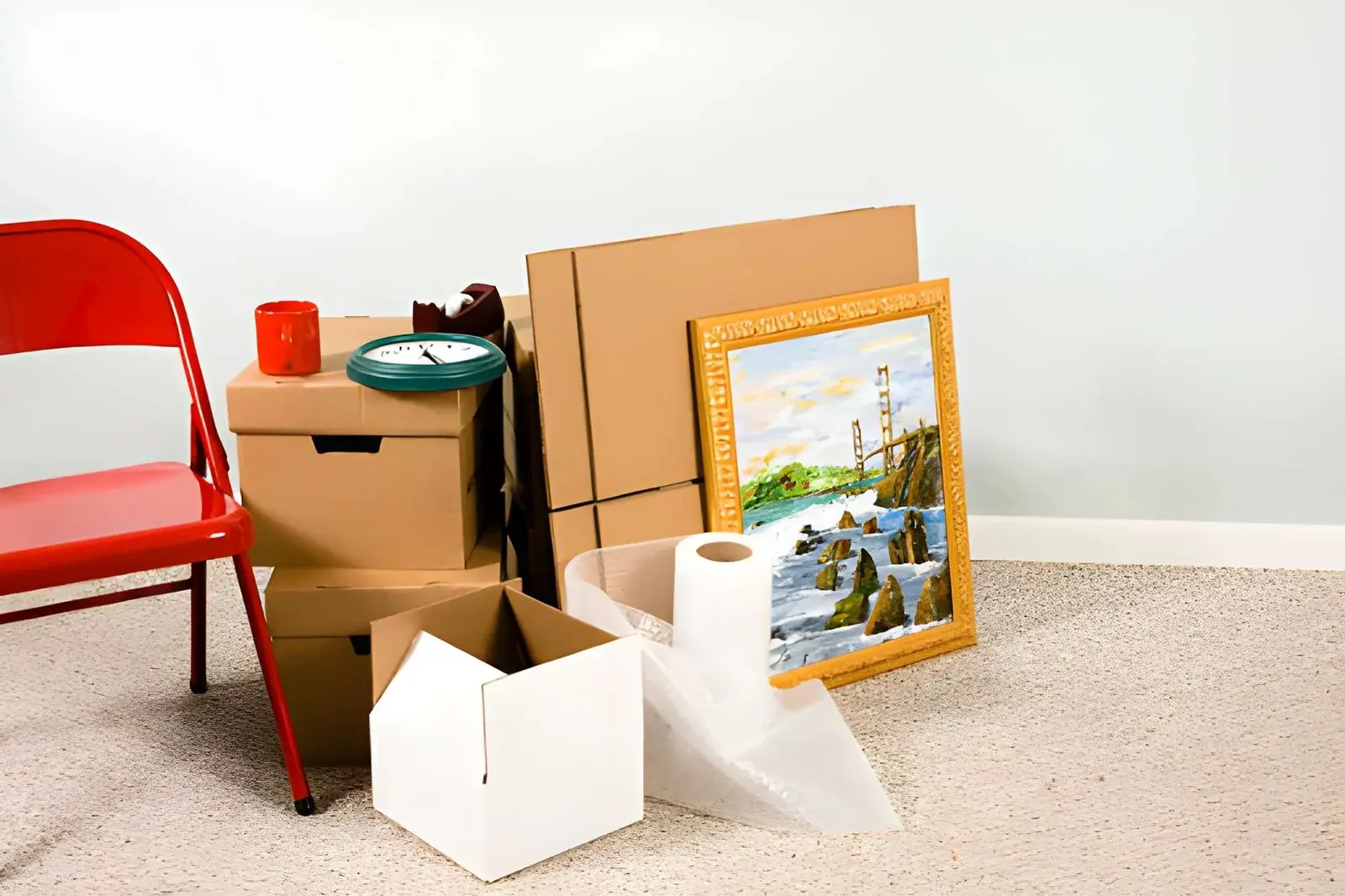
Materials You Need to Pack a Painting Safely
For each painting you need glassine paper or clean acid-free tissue, a roll of bubble wrap, cardboard corner protectors, two sheets of stiff cardboard or foam board cut larger than the piece, packing tape, and a box or picture carton that the wrapped painting fits into with two to three centimetres of space on every side. Painter’s tape is needed for any glazed frame. A marker for labelling finishes the list.
Hardware stores in Chatswood and Hornsby sell picture boxes in a few sizes, and the telescoping kind that slides to fit is worth having for anything over a metre. Art supply shops sell glassine by the roll. Skip newspaper entirely on paintings. The ink transfers, and the paper is not smooth enough to sit against varnish. Budget $15 to $30 of materials per painting, more for a large canvas that needs a custom box.
How to Pack a Painting for Moving: Step by Step
The order is the same for every painting: photograph it, protect the face, protect the corners, wrap the whole piece, sleeve it in rigid board, box it, and label it upright.
Step 1: Photograph the Painting and Check the Back
Take a photo of the front and back of every painting before it is wrapped, with the date visible or the file timestamped. Look closely at the corners of the frame, the tension of the canvas and the state of the hanging wire. A wire that is frayed goes on the truck as a loose end that scratches the next painting, so cut it off and pack it separately or replace it at the new house.
Check the back for anything loose. Old paintings often have a paper dust cover that has torn, a label from a framer, or wedges in the stretcher corners that have worked loose. Tape a torn dust cover down with archival tape, and push any wedges back in gently. The back of a canvas is what most people forget, and it is the side that takes the pressure when the piece is stacked.
Step 2: Cover the Painted Surface with Glassine
Lay a sheet of glassine over the face of the painting so it covers the whole surface and folds around the edges. Glassine is smooth, slightly waxy and does not stick to varnish, which is why framers and galleries use it. For an unglazed oil or acrylic, this is the only thing that should touch the paint. Tape the glassine to itself on the back, never to the frame or the canvas.
A framed piece under glass gets a different first step. Run painter’s tape in an X across the glass from corner to corner, then a second X to make a star. If the glass breaks, the tape holds the pieces together instead of letting them slide into the canvas. Painter’s tape peels off clean; ordinary packing tape leaves adhesive on the glass and pulls gilding off a frame.
Step 3: Wrap, Sandwich in Rigid Board and Box It
Fit a corner protector to each corner of the frame or stretcher, then wrap the whole piece in bubble wrap with the bubbles facing out, away from the glassine. Two layers on a large piece, one on a small one. Cut two sheets of stiff cardboard or foam board a few centimetres larger than the painting on every side and sandwich the wrapped piece between them, then tape the sandwich shut around all four edges.
Slide the sandwich into the picture box. It should not rattle. Fill any gap with crumpled packing paper or foam, tape the box on every seam, and write FRAGILE, THIS WAY UP with an arrow, and PAINTING on both long sides. The side labels are what our movers read once the box is on a trolley. A painting box is carried by hand, upright, and never laid flat on top of another box.
Packing an Unframed Stretched Canvas
An unframed canvas is the piece most likely to be damaged by good intentions. Do not wrap it tight, because the wrap presses the front and back of the fabric toward each other and leaves a dent. Do not lean anything against the back, because the stretcher bars print through. The corner protectors and the rigid sandwich are doing the work here, and the bubble wrap is a loose outer layer rather than a tight one.
A large canvas over about 1.2 metres often has no box that fits, and the answer is to build one. Two full sheets of thick cardboard taped around the sandwiched canvas with a cardboard strip along each edge makes a rigid crate that will take a knock. For a very large piece it can be worth asking the artist or a framer to take the canvas off the stretcher and roll it face out around a wide tube, which is how galleries ship them, but that is a last resort and not for an old painting.
Packing Paintings for Interstate Moves
A box that survives Mosman to Lindfield is not packed for 900 kilometres of the Hume Highway. The difference is vibration. Ten hours of road hum works a loose wedge out of a stretcher and rubs a corner through a single layer of bubble wrap, and the temperature inside a truck changes by 20 degrees between Goulburn at dawn and Melbourne at lunch. Interstate paintings get the full treatment: double glassine, double bubble wrap, foam board rather than cardboard in the sandwich, and a timber crate for anything valuable or over a metre.
Careful Movers runs the Melbourne, Brisbane, Canberra, Gold Coast and Adelaide routes, and fragile furniture transport from Sydney to interstate covers how artwork and antiques are crated and braced for the run. Tell the owner about the paintings when you book. They are listed separately on an interstate quote, and a piece worth more than the rest of the load together is worth a conversation about how it travels before the truck leaves.
How Paintings Are Loaded and Carried on Moving Day?
Paintings ride upright, always, and never flat. On a Careful Movers truck they stand between two mattresses or against the padded wall behind the cab, strapped so they cannot tip, with nothing stacked on them and nothing heavy beside them that could shift on a corner. The boxed and labelled painting goes on last and comes off first, which is why the fragile boxes should be grouped near the front door on the day.
Stairs are the other risk point. A painting box is carried by hand down a stairwell rather than on a trolley, held upright by one mover with a second on the landing, and moving furniture upstairs and downstairs in Sydney covers how the rest of the load handles a walk-up in Neutral Bay or Cammeray. If the painting is the whole job, one large piece going from a Wahroonga home to a daughter’s place in Cremorne, moving small loads in Sydney on the 3-tonne North Shore Jumper is a short booking at $190 per hour.
Unpacking and Rehanging Paintings After the Move
Leave the paintings in their boxes for a day. A painting that has come out of a warm truck into an air-conditioned house needs time for the canvas and the timber to settle, and a canvas that is hung while it is still cold from the trip can slacken as the room warms. Unpack on a table, not the floor, and peel the painter’s tape off any glass slowly and at a low angle so it does not lift the frame finish.
Check each piece against the photo you took before packing. Corners, canvas tension, varnish, glass. If something has changed, the photo is the record, and the day of unpacking is the time to raise it rather than a month later. Hang the painting on two hooks rather than one, out of direct sun and away from the air-conditioning vent, and it will not need to be packed again until the next move.
Frequently Asked Questions
Q. How do you pack a painting for moving?
Photograph it, cover the face with glassine paper, fit corner protectors, wrap loosely in bubble wrap with the bubbles facing out, sandwich it between two sheets of stiff cardboard or foam board, box it with no room to rattle, and label it FRAGILE and THIS WAY UP on both long sides.
Q. Can you wrap a painting in bubble wrap?
Yes, but never directly against the paint. Bubble wrap on bare oil or acrylic leaves a bubble pattern in the surface, especially in Sydney heat. Put glassine or acid-free tissue over the face first, then wrap in bubble wrap with the bubbles facing outward and the wrap loose rather than tight.
Q. Should paintings be moved flat or upright?
Upright, always. A painting laid flat takes the weight of anything placed on it and flexes across the middle of the canvas. Standing on its edge, the frame or stretcher carries the load along its strongest line.
Q. How do you pack a framed painting with glass?
Tape a star pattern across the glass with painter’s tape so a break stays in one piece, then wrap and sandwich the frame the same way as an unglazed painting. Use painter’s tape, not packing tape, because packing tape leaves adhesive on glass and pulls the finish off a frame when it is removed.
Q. Do removalists pack paintings for you?
Some Sydney removalists offer a packing service at an added rate. Careful Movers wraps and protects furniture on the day as part of the hourly rate and carries boxed paintings upright by hand, and customers pack the paintings themselves before the crew arrives.